
Choosing Cooking Oils

Some Food Science
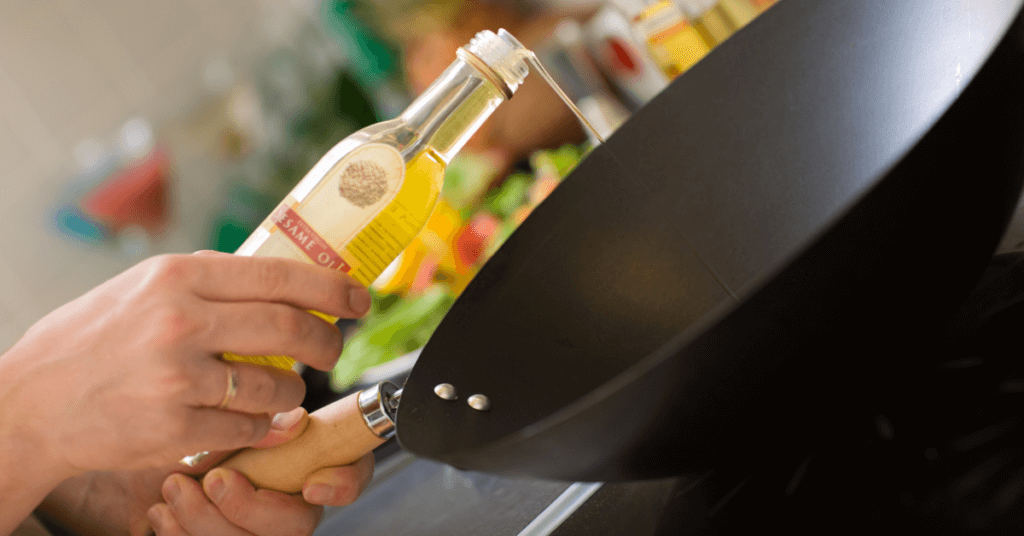
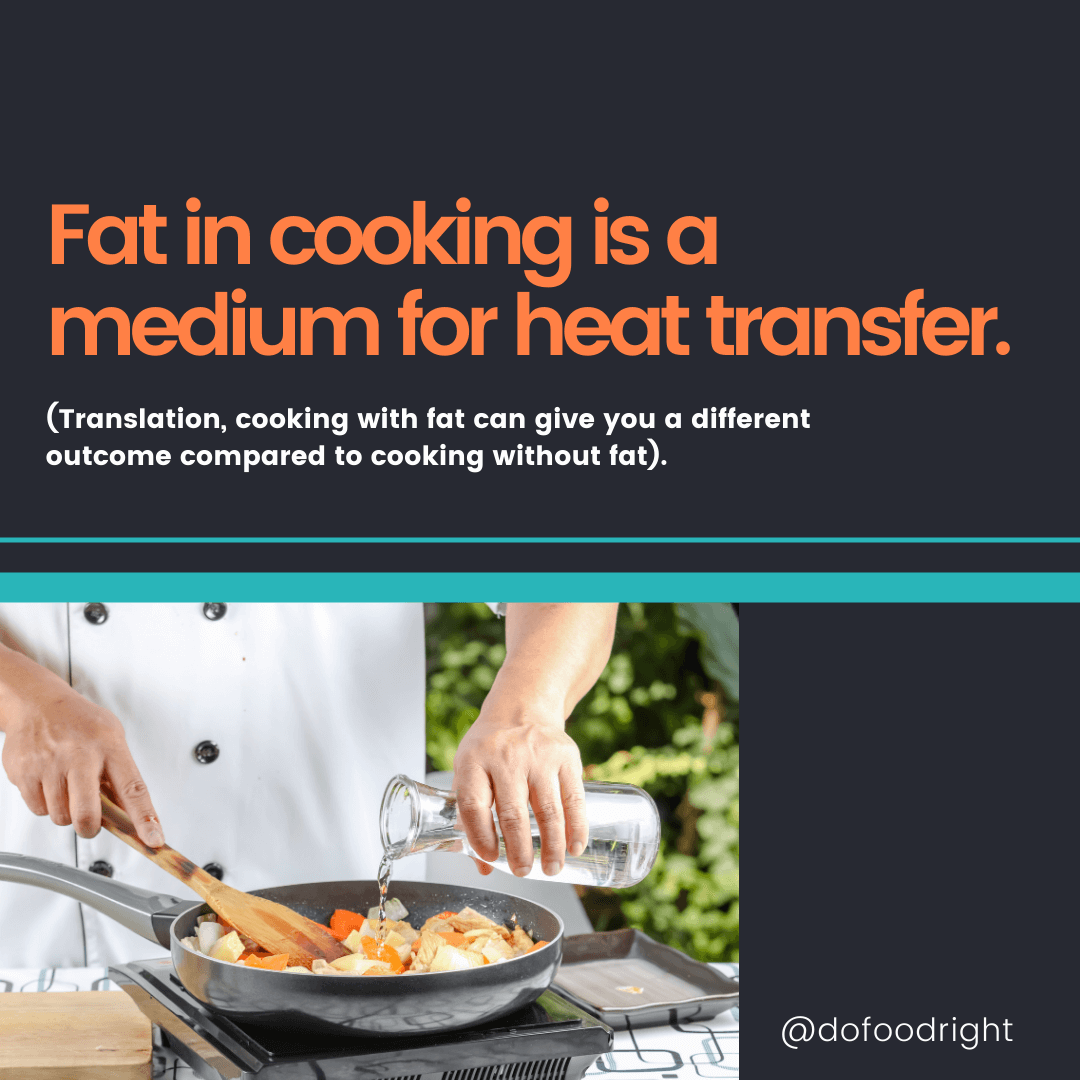
Oils are fat-containing ingredients used in cooking to transfer heat and create a yummy taste and texture of the food! Transfer heat? What does that mean? Think about cooking a piece of chicken (or tofu for the vegetarians among us) in a frying pan. If you cook without the oil or with minimal oil, the food cooks consistently meaning the inside of the food cooks at about the same rate as the outside of the food. The food will not really develop that browned crust that we think of with a nice crispy pan-fried piece of food. But, if we cook with a tablespoon of oil, the outside of the food starts to brown a bit faster. The oil that is in contact with the food surface is transferring heat, but the inside of the food is not in contact with the oil, so it continues to cook at a similar rate to the pan without the oil.
Now go impress your family and friends with this fun tidbit of cooking science! (Well, first read the article, then go impress your people.)
The Science of Dietary Fats
Cooking oils contain three types of fatty acids: saturated (SFA), monounsaturated (MUFA) and polyunsaturated (PUFA). The term saturated fat refers to full “saturation” of carbons within a chain with hydrogens on each carbon. Why does that matter? It changes the way it reacts with other compounds both in cooking and in the body.
In general, we want to limit our saturated fat intake and instead focus on MUFAs and PUFAs in the diet.
Some fatty acids are essential. This means our bodies rely on us to eat foods with these types of fats. The two essential fatty acids are alpha-linolenic and linoleic, more commonly known as omega-3 and omega-6 polyunsaturated fatty acids.
What else should we consider when choosing a cooking oil?
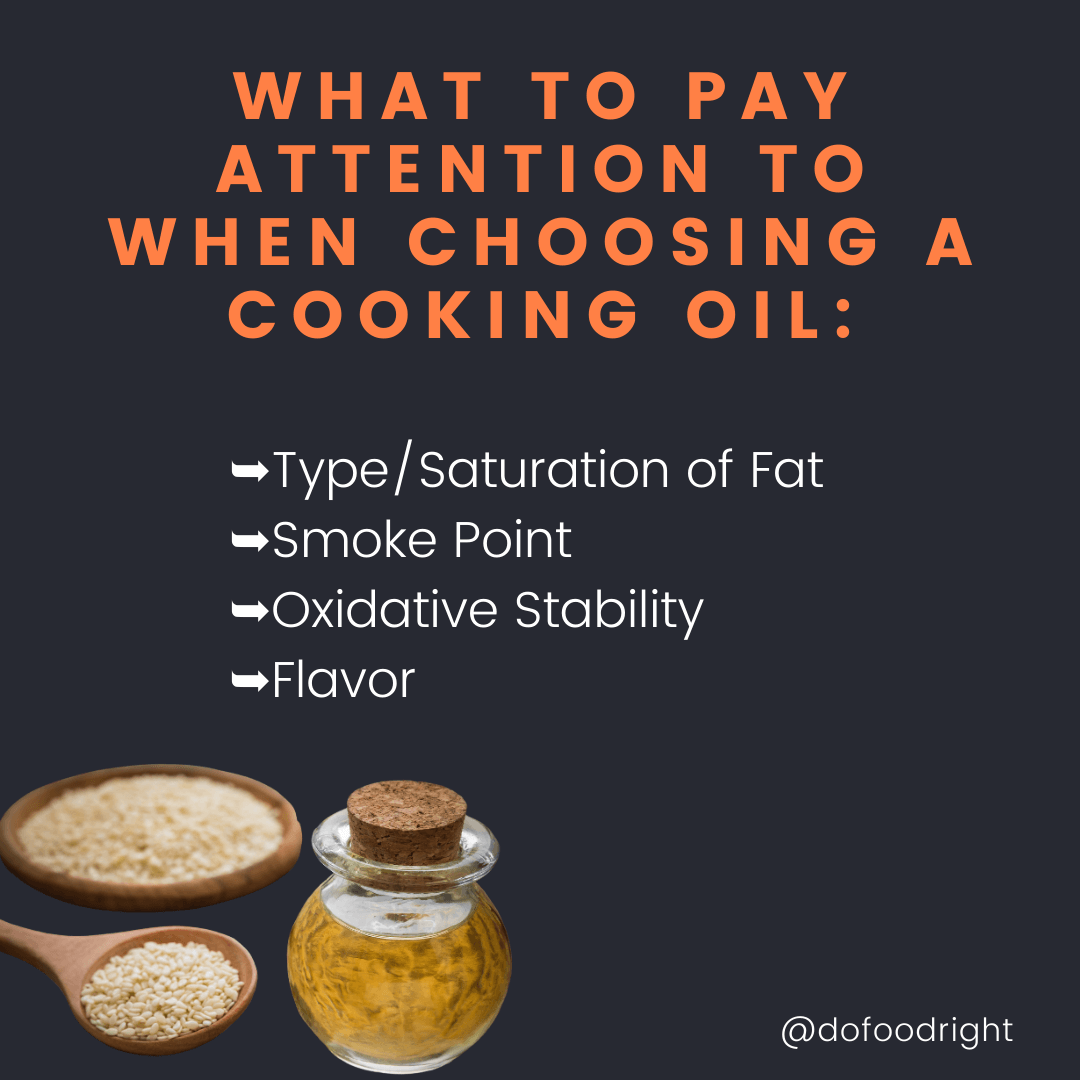
Some differences in oil that you may consider are:
- Smoke Point: cooking at higher temperatures can compromise both flavor and health attributes of the cooking oil.
- Oxidative stability: less refined oils and those with higher antioxidant levels are more stable, meaning there are fewer harmful chemical changes that occur with cooking of the oil and with shelf life.
- Flavor: while some oils have very mild or neutral flavors, especially in cooked food, you may choose an oil based on flavor preference. Often oils used to dress salads or add a nutty flavor to certain cultural dishes. In these cases, you may want to have an oil on hand specifically for these dishes!
Some of My Top Picks
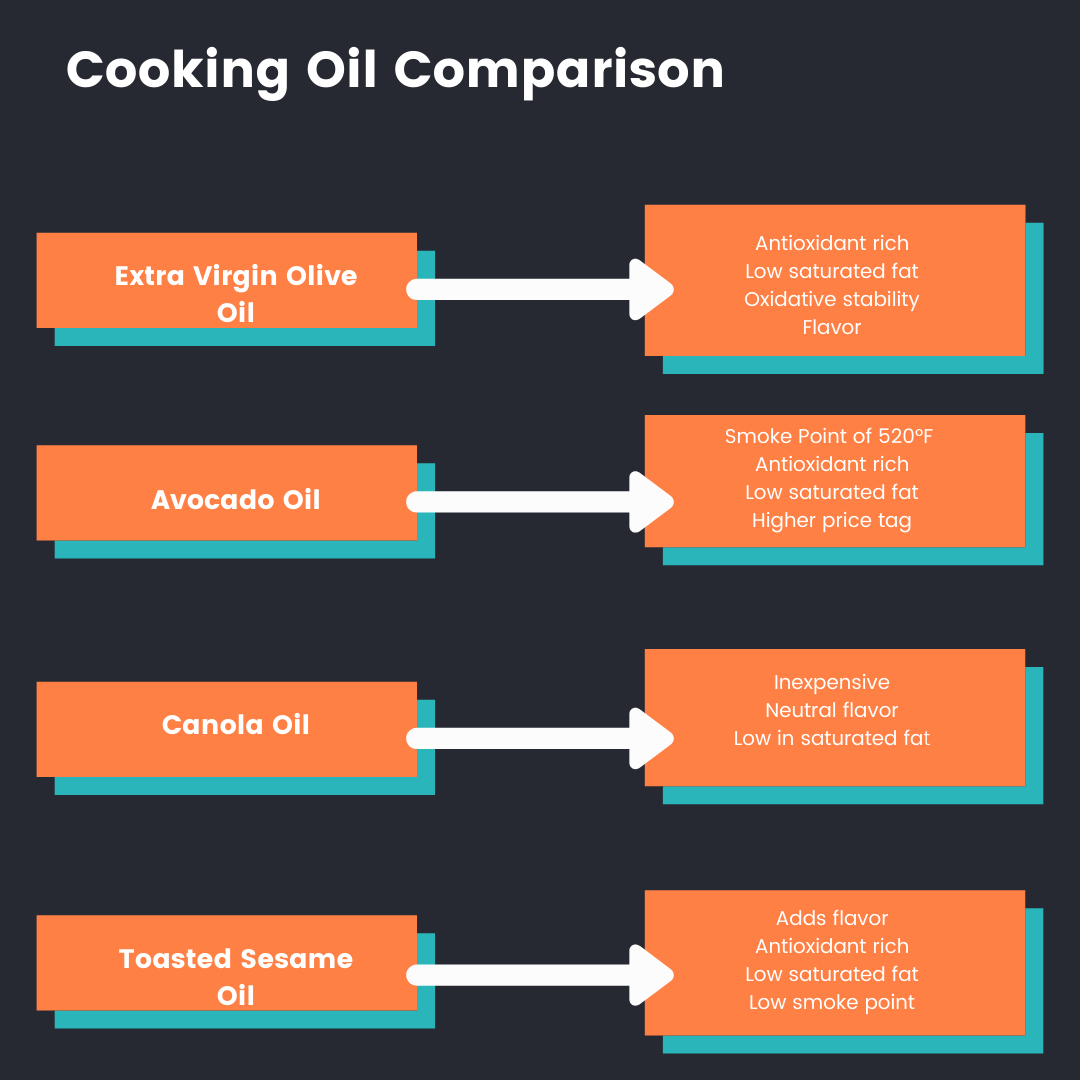
- Extra Virgin Olive Oil: I choose EVOO as my go-to oil for its beneficial health qualities. It contains antioxidants, a low saturated fat content, and maintains oxidative stability. From a taste perspective, this oil adds a lovely smooth and peppery flavor on a tossed salad (or with crusty bread!)
- Avocado Oil: This has a higher smoke point than olive oil (520°F compared to 375°F) so it works well for stir fry or other types of higher-heat cooking methods. Similar to olive oil, this is a high antioxidant oil and contains a low percentage of saturated fat. I have found it to be a pricier option so I do reserve it for high heat cooking!
- Canola Oil: This is an inexpensive oil, also known as rapeseed oil. The flavor is fairly neutral so it can be used in almost any recipe, but I use it most often in baking.
- Toasted Sesame Oil: Want to branch out and try something new? This oil adds a lovely nutty flavor, but I recommend using it as a finishing touch, not a cooking oil. It is best to drizzle over raw or cooked veggies or serve as a condiment with Asian inspired noodle or grain bowls. This oil is rich in antioxidants and, you guessed it, a low saturated fat content.
So Which Is the Best Cooking Oil?
The bottom line, like most of nutrition, is that it really depends on what your goals are. Are you trying to perfect your pan-fried protein recipe? Go for an oil with a higher smoke point. Are you interested in branching out to new flavors? Maybe try a specialty oil like toasted sesame. Are you aiming for the best bang for your buck? Canola might be your go-to. Choosing just one as the best for everyone short-changes the wide range of what food can do for you.
What is your favorite cooking oil?
Are you looking for more info about nutrition?
Download our 5 Tips To Do Food Right and follow us on Facebook and Instagram @dofoodright

The One You Nutrition team believes food is nourishment, medicine and fuel. That belief drives our passion for nutrition and energizes us to share our expertise in Wellness, Sports Nutrition and Obesity & Weight Management to improve the lives of our clients. As the food expert on your team, we coach you to set your ultimate vision of success, plan action steps, embrace strengths, improve weaknesses and master the skills to Do Food Right™.
Do You Feel like You’re Doing Food Wrong?
CHECK OUT OUR FREE GUIDE!
There is so much nutrition information out there that it’s impossible to know where to start. We’ve simplified the message with 5 tips which we believe are applicable to everyone
5 ways to “Up” your (healthy) pizza game
6 Things to Include in Your Food Journal